A software outsourcing SOW turns an outsourcing discussion into an executable delivery agreement. It should define the project objective, scope, deliverables, responsibilities, schedule, acceptance criteria, assumptions, dependencies, change control, and handover expectations for one specific project or phase. A practical SOW should help the buyer, vendor, product owner, engineering lead, QA lead, and finance team […]
Software Outsourcing Contract Guide: When to Use NDA, MSA, SOW, and SLA
A software outsourcing contract is rarely one document. In a practical outsourcing engagement, the contract stack usually includes an NDA for confidential pre-sales exchange, an MSA for the legal and commercial baseline, a SOW for project-specific scope and delivery, and an SLA when the work involves support, maintenance, production operations, or measurable service commitments. This […]
Software Outsourcing MSA Checklist: Scope, IP, Payment, Liability, and Termination Clauses
Master Services Agreement for software outsourcing is the parent contract that sets the commercial, legal, security, governance, and relationship rules before individual projects begin. It should not try to describe every sprint task or every deliverable. In a healthy software outsourcing contract stack, the MSA defines the rules of the relationship, while the SOW defines […]
AI in Outsourcing Pricing Models: How Automation, Tool Costs, Quality Control, and Productivity Gains Change Pricing Decisions
AI in outsourcing pricing models is not about making every contract suddenly outcome-based or “AI-powered.” The real shift is more practical: AI can reduce manual effort in some workflows, introduce new usage-based cost layers, change how quality-control work is handled, and make productivity gains harder to price with old labor-only assumptions. Where AI changes outsourcing […]
Outsourcing Vendor Due Diligence Explained: How to Evaluate Security, Delivery Capability, Compliance, Financial Stability, and Contract Risk
Outsourcing vendor due diligence is the structured review a buyer runs before selecting, contracting with, or transitioning work to an outsourcing provider. It should test whether the vendor can actually deliver the work, protect data, support compliance, operate transparently, and exit cleanly if the relationship changes. This guide is a business review checklist, not legal, […]
Hybrid Outsourcing Model Explained: What It Is, How It Works, Benefits, Risks, and When It Makes Sense
A hybrid outsourcing model is not just “using offshore plus onshore.” It is a deliberate mix of outsourcing choices across location, pricing, engagement, and service delivery. That matters because a company may use offshore delivery for cost and talent access, nearshore coverage for collaboration, time-and-materials pricing during discovery, fixed-price delivery for a stable build, managed […]
Managed Service Delivery Explained: Scope, SLAs, Governance, and Accountability
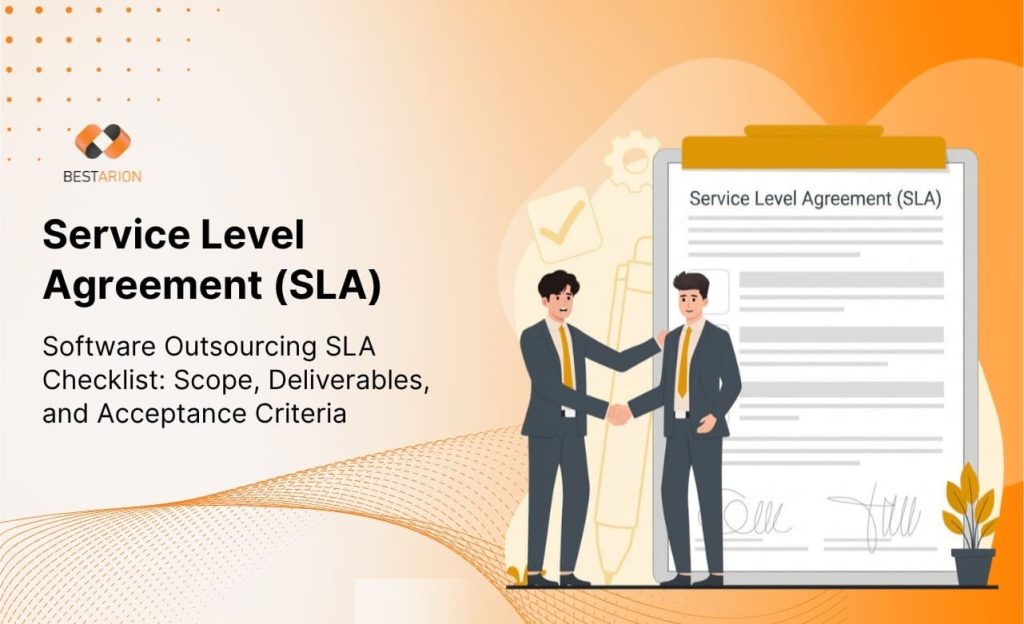
See how a managed service delivery model helps avoid delivery gaps with clear SLAs, governance, escalation paths, and ownership. When a vendor starts owning outcomes, the risk moves too The problem is not usually whether a vendor can “provide resources.” It is whether the vendor is responsible for an ongoing service outcome, not just assigned […]
Outsourcing Service Delivery Models Explained: How Governance, SLAs, Reporting, and Vendor Responsibility Shape Delivery
An outsourcing service delivery model explains how a service is organized and run. It is not the same as where the work happens, how the provider is paid, or whether the buyer uses staff augmentation, a dedicated team, or a project-based engagement. This distinction matters because buyers often compare vendors using one word, “outsourcing,” while […]
Staff Augmentation Contract Clauses: How to Avoid Unclear Scope, Weak IP Terms, Vague SLAs, and Cost Surprises
A staff augmentation contract is not just a rate card. It decides who directs the work, who owns the output, how replacements are handled, how confidential data is protected, and what happens when performance, security, or continuity breaks down. Use this guide as a practical review checklist before signing. It is not legal advice; contract […]
Staff Augmentation Explained: What It Is, How It Works, Benefits, Risks, and When to Use It
Staff augmentation is an outsourcing engagement model where a company adds external professionals to its existing team to fill skill gaps, increase delivery capacity, or support a project without handing full delivery ownership to a vendor. The important distinction is control. In staff augmentation, the provider supplies talent, but the buyer usually keeps day-to-day direction, […]