
The Era of Autonomous AI 2026: Multi-Agent Architecture and the Digital Transformation Roadmap for Enterprises
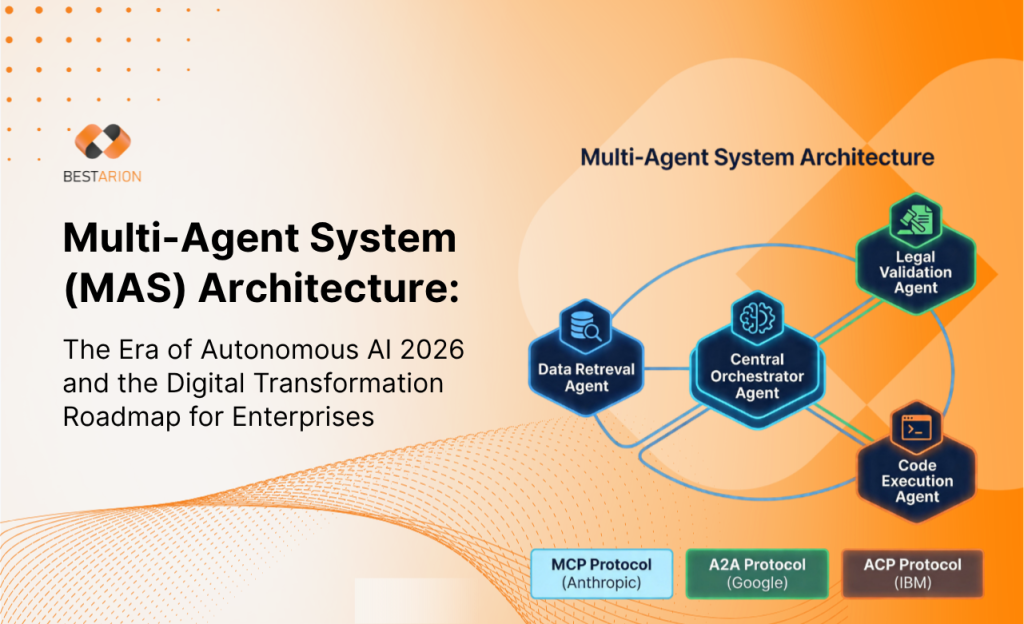
Autonomous AI in 2026 is not the same thing as sprinkling copilots across the enterprise. For most companies, the real shift is from isolated prompt-response tools to agentic workflows that can plan, call tools, hand work to specialists, and operate against business systems with tighter guardrails. That shift matters because enterprises are discovering a hard truth: the value ceiling of single-step AI is much lower than the value ceiling of workflow automation that can reason across tasks, policies, and systems.
But that does not mean every enterprise should jump straight into a sprawling multi-agent architecture. The winning pattern is usually narrower and more deliberate: choose high-friction workflows, prove the human and financial value, add orchestration only when single-agent flows start to break, and scale governance as aggressively as you scale autonomy.
Where enterprise AI programs get stuck
- You can see that chat-style copilots help with tasks, but you still do not have an enterprise architecture for agents that can work across systems safely.
- You need to know when a single agent is enough and when a multi-agent architecture is justified.
- You are trying to connect autonomous AI to digital transformation, not treat it as a side project owned only by innovation teams.
- You need a roadmap that covers workflow design, data readiness, security, evaluation, and operating-model change together.
- You want to avoid building an expensive agent platform before you have proven where autonomy actually creates value.
Key Takeaways
- Multi-agent architecture is best understood as orchestrated specialization: a manager or orchestrator coordinates domain agents, tool-calling agents, or handoffs instead of forcing one model context to do everything.[1][3]
- Anthropic’s field data show why the architecture matters and why it must be selective: multi-agent systems can improve reasoning on large tasks, but they can also consume dramatically more tokens than chat interactions.[2]
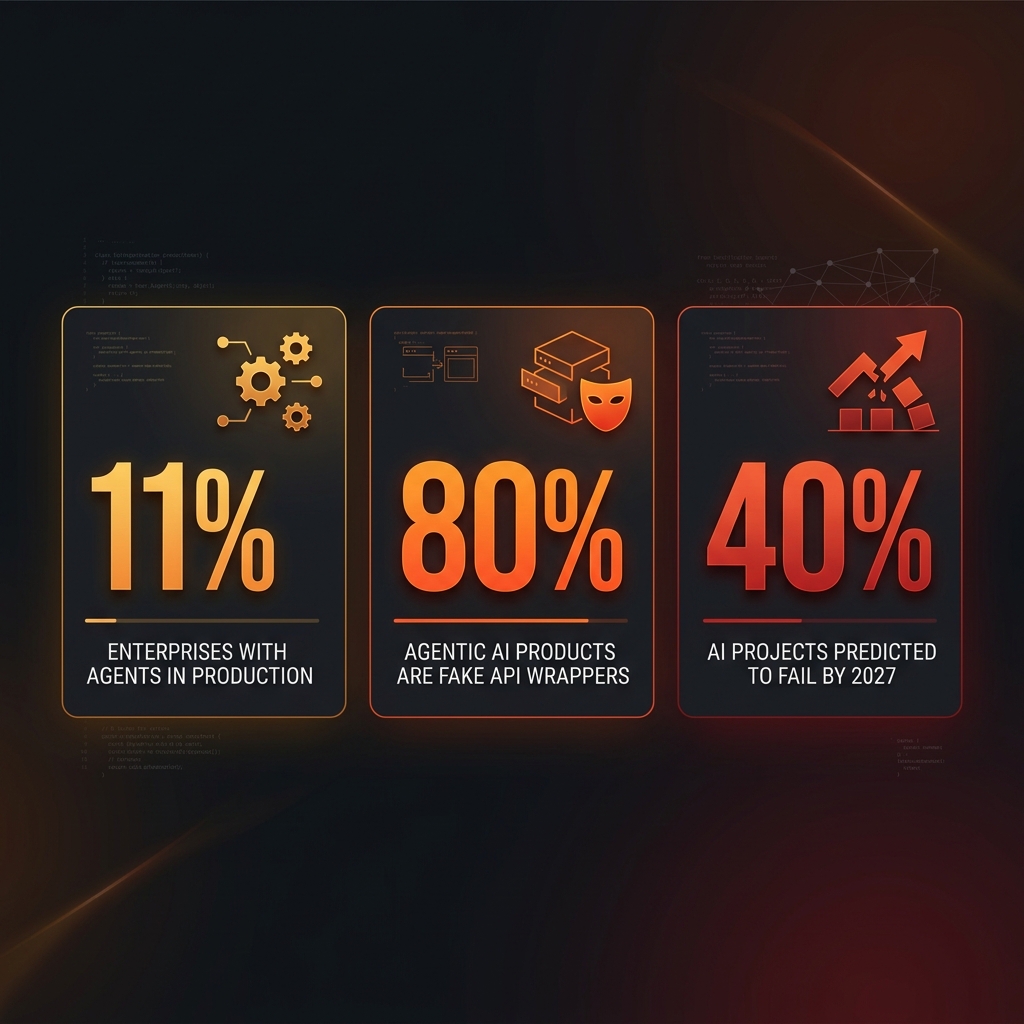
- Most enterprises are still earlier in the journey than the hype suggests. McKinsey reports broad AI use, but enterprise-wide scale remains a work in progress and fewer than 10 percent of respondents reported scaling AI agents in any single function.[5]
- A credible digital transformation roadmap for autonomous AI starts with workflow redesign, data quality, evaluation, and governance, not with a generic platform rollout.[4][6][8][9][10]
- The strategic target is not ‘maximum autonomy everywhere.’ It is the right autonomy level for each workflow, paired with human ownership, security controls, and explicit evaluation gates.[6][7][8][9]
What the era of autonomous AI actually means in 2026
The enterprise conversation has moved beyond a simple question of whether AI can generate useful answers. The harder question now is whether AI can operate as part of a business workflow with enough context, reliability, and control to move work forward on its own. That is the real meaning of autonomous AI in 2026: not fully unsupervised machines everywhere, but software systems that can plan, act, recover, and escalate within a bounded operating model.
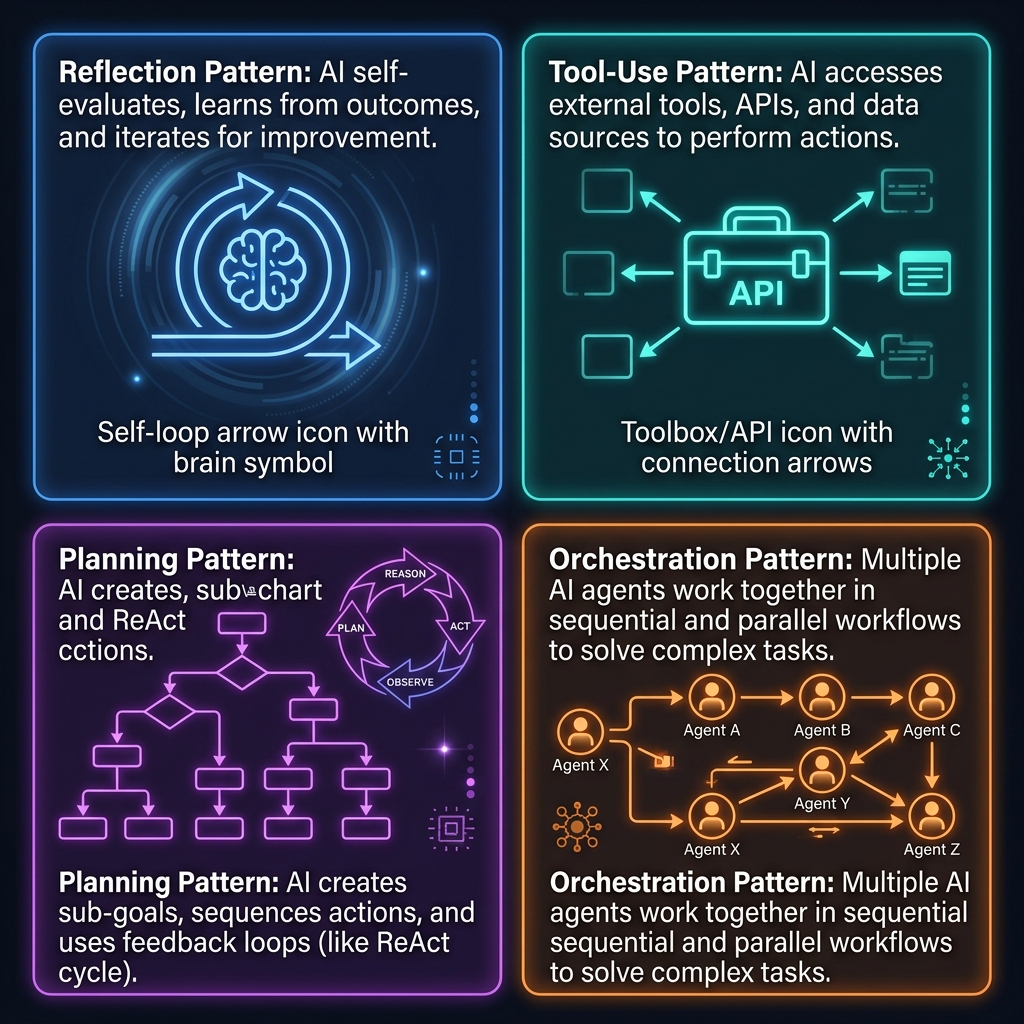
This is why the language of agents and multi-agent systems is becoming central. OpenAI’s practical guide describes two broadly useful multi-agent patterns: a manager agent that coordinates specialists as tools, and decentralized handoffs among peer agents with narrower roles. Anthropic’s 2026 coding report adds the architectural contrast clearly: single-agent workflows process tasks sequentially in one context window, while multi-agent systems use an orchestrator to run specialized agents in parallel and then synthesize the result. In practice, that means the architecture is not just a model choice. It is a workflow choice about decomposition, routing, memory, tool access, and accountability.[1][3]
Why enterprises are moving toward multi-agent architecture
Single-agent systems usually fail in three predictable ways once enterprise complexity rises. First, they struggle when one context window has to juggle research, planning, execution, exception handling, and compliance logic at the same time. Second, they become brittle when one generic prompt has to manage many tools and system actions. Third, they are hard to evaluate because the same agent is responsible for every stage of the work.
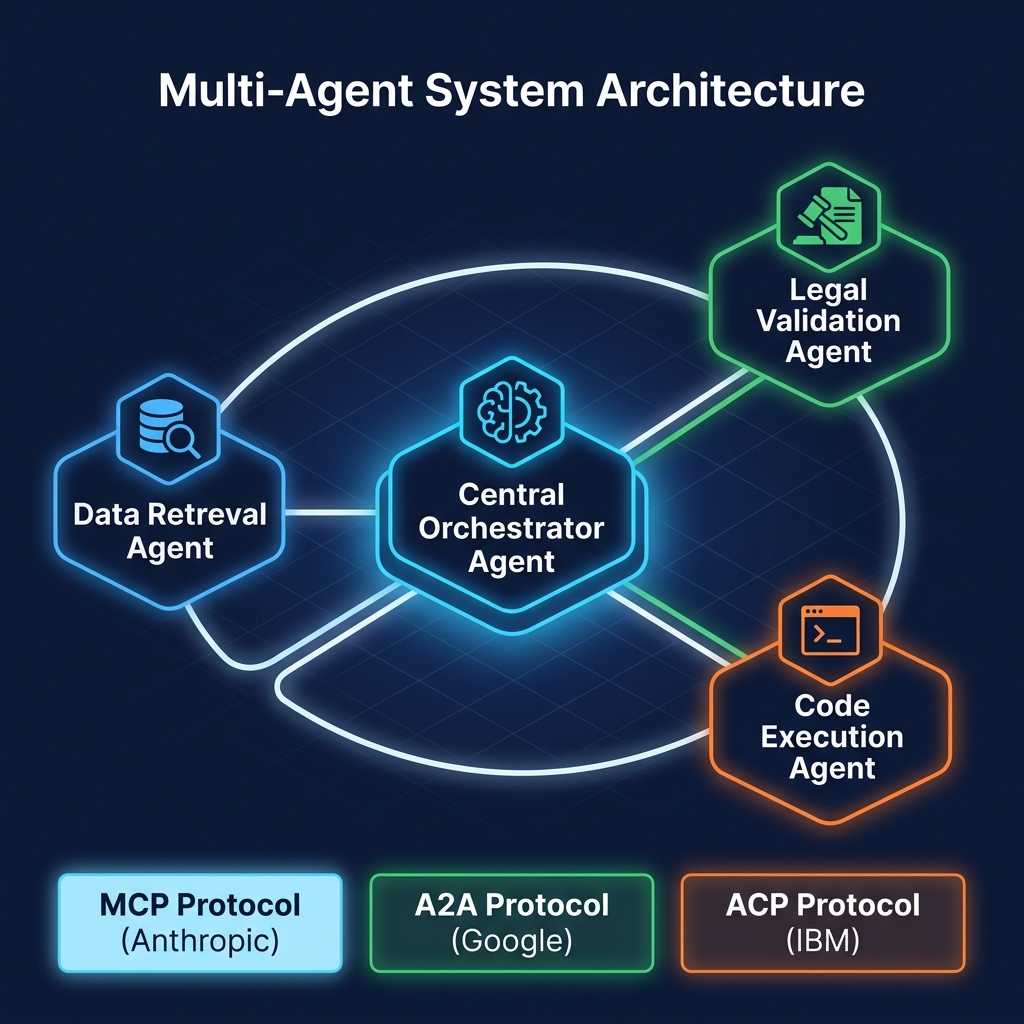
That is why multi-agent architecture is emerging in enterprise use cases that have real workflow complexity. Anthropic says its own multi-agent research system distributes work across agents with separate context windows to gain parallel reasoning capacity, but it also warns that the cost profile can jump sharply. AWS, Google Cloud, and enterprise case studies are showing a similar lesson: orchestration plus specialization is powerful when workflows contain distinct subproblems such as retrieval, policy checks, forecasting, document generation, or claims handling. But the architecture only makes sense when the task value is high enough and the workflow can be cleanly decomposed.[2][10][11]
A reference multi-agent architecture for enterprises
| Architecture layer | What it does | What leaders should notice |
|---|---|---|
| Experience layer | User request, workflow trigger, or application event enters the system | The enterprise defines the task, permissions, and expected business outcome. |
| Orchestration layer | A manager agent or controller decides which specialist to invoke and when to stop | This is where autonomy level, routing logic, and escalation rules are enforced. |
| Specialist agent layer | Research, planning, policy, coding, analysis, or domain-specific agents work in narrower contexts | Specialization improves clarity, evaluation, and control. |
| Tool and system layer | Agents call retrieval systems, enterprise apps, APIs, databases, or workflow engines | Tool access must follow least privilege and explicit policy. |
| Memory and context layer | The system supplies the right task context, state, history, and knowledge | Without context engineering, even strong models become noisy or unsafe. |
| Control and evaluation layer | Logs, tests, policy checks, human review, and performance metrics validate outputs | Evaluation is a first-class system, not a postscript. |
The important design choice is not simply how many agents exist. It is whether the boundaries among those agents mirror real business boundaries in the workflow. A specialist agent is useful only if it makes control, evaluation, and reasoning cleaner than a single generalist agent would.[1][4][7][8]
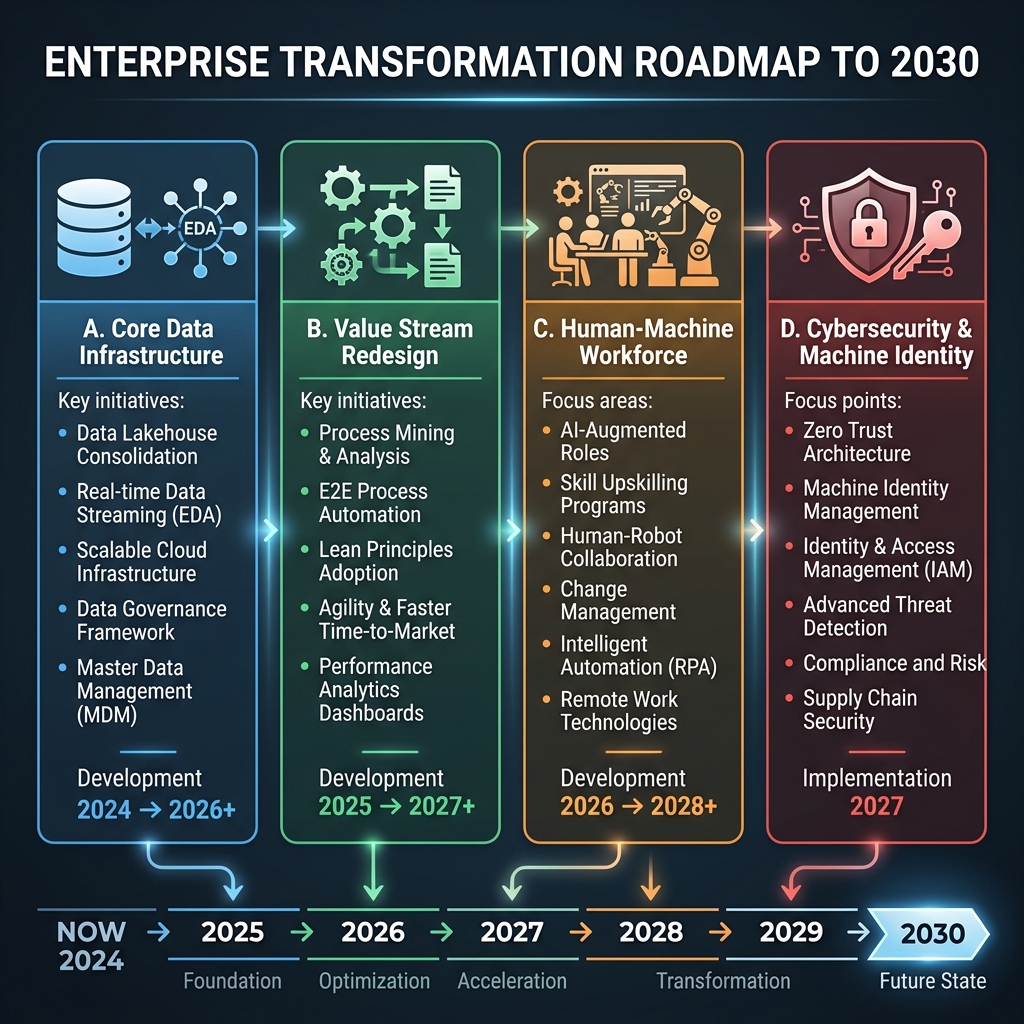
A practical digital transformation roadmap for enterprise autonomous AI
1. Pick workflow candidates, not generic departments
Start with high-friction workflows where handoffs, delays, or repeated analysis already create measurable pain. McKinsey’s research suggests many firms still have not embedded AI deeply into workflows, so roadmap design should begin with specific process bottlenecks, not abstract transformation slogans.[4][5]
2. Prove the single-agent baseline first
Do not force a multi-agent architecture on every use case. AWS warns that many teams overbuild too early. Establish what a strong single-agent or simple workflow can do before adding orchestration.[1][10]
3. Add orchestration only where decomposition creates value
Multi-agent design becomes worth it when the task can be separated into specialist subproblems such as planning, retrieval, policy review, or action execution.[1][2][3]
4. Upgrade data and context systems
McKinsey’s scaling guidance is blunt: agentic AI scales on strong data. That means trusted knowledge, clean workflows, good metadata, and high-quality context injection.[4]
5. Build security, evaluation, and escalation into the workflow
NIST, Microsoft, and AWS all point to the same principle: control must be designed into the lifecycle, not bolted on after deployment.[6][7][8]
6. Redesign the operating model around human ownership
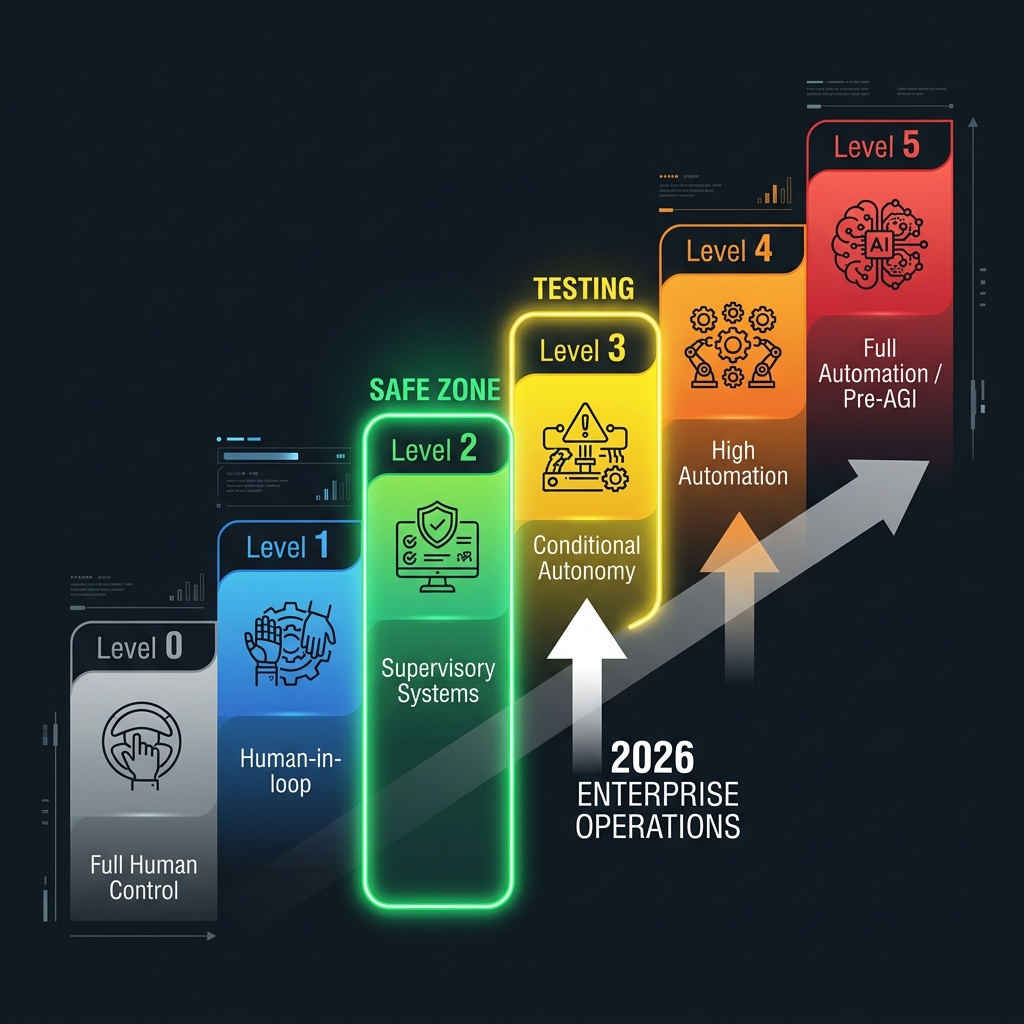
Autonomous AI changes who reviews, who approves, who intervenes, and who owns outcomes. Deloitte frames this as a phased transformation up an autonomy ladder rather than a one-time implementation.[9]
What must be governed before enterprises scale autonomous AI
The easiest way to fail with autonomous AI is to treat architecture as the main problem and operating discipline as an afterthought. In reality, the architecture only works when governance answers are already in place.
At minimum, leaders need explicit decisions on four fronts. First, permission design: which agents can read which systems, and which actions require human approval. Second, evaluation: how outputs are tested, compared, and monitored over time. Third, escalation: how the system surfaces ambiguity, policy conflicts, or low-confidence states. Fourth, accountability: which human team owns business outcomes when an agent chain crosses product, data, security, and operations boundaries. NIST’s AI RMF, Microsoft’s Zero Trust guidance, and Amazon’s evaluation framework all converge on the same point: reliable agentic systems are governed systems.[6][7][8]
Common failure modes in autonomous AI roadmaps
- Starting with a platform purchase before defining which workflows deserve autonomy.
- Assuming multi-agent automatically means better results, even when the workflow is simple enough for a single agent.
- Using business-value language in the executive deck but leaving data quality and context engineering unresolved.
- Treating evaluation as an experiment-only activity instead of a production control loop.
- Equating more autonomy with better transformation rather than matching autonomy to risk, reversibility, and workflow value.
Frequently Asked Questions
Does every enterprise AI roadmap need a multi-agent architecture?
No. A multi-agent architecture is justified when the workflow contains distinct specialist subproblems, heavy tool use, or context limits that one agent handles poorly. For simpler workflows, a strong single-agent system is often cheaper and easier to govern.[1][2][10]
What is the biggest difference between autonomous AI and ordinary enterprise automation?
Ordinary automation follows predefined logic. Autonomous AI introduces planning, interpretation, and adaptive behavior. That makes it more powerful, but it also raises the bar for governance, evaluation, and human escalation.[6][8][9]
Where should enterprises start in 2026?
Start with one workflow where delays, handoffs, or repetitive analysis are already measurable. Prove the single-agent baseline, define the ownership model, and only then decide whether orchestration and specialist agents are worth the added cost.[4][5][10]
What to Keep in Mind
- Think in workflows first and models second.
- Treat multi-agent architecture as an orchestration decision, not a default badge of maturity.
- The real enterprise roadmap combines workflow redesign, data readiness, evaluation, security, and human ownership.
- If you are trying to understand how this shift changes software delivery itself, read next: From “Vibe Coding” to “Agentic Software Engineering”: The Era of Autonomous Systems.
Sources
- [1] OpenAI, “A practical guide to building AI agents.” Used for manager-vs-decentralized multi-agent orchestration patterns and the rule that multi-agent design should follow clear, composable prompts. Read source ↩
- [2] Anthropic, “How we built our multi-agent research system.” Used for the trade-off between parallel reasoning gains and much higher token consumption in multi-agent systems. Read source ↩
- [3] Anthropic, “2026 Agentic Coding Trends Report.” Used for the distinction between single-agent and multi-agent workflows and the shift toward long-running agents. Read source ↩
- [4] McKinsey, “Building the foundations for agentic AI at scale.” Used for the argument that agentic AI scales on strong data, high-impact workflows, data quality, and operating-model change. Read source ↩
- [5] McKinsey, “The state of AI in 2025: Agents, innovation, and transformation.” Used for enterprise adoption context, including widespread AI use but limited scale of agent deployment in most functions. Read source ↩
- [6] NIST, “AI Risk Management Framework” and the Generative AI Profile. Used for governance language around managing generative-AI risks across the lifecycle. Read source ↩
- [7] Microsoft Security Blog, “Secure agentic AI end-to-end.” Used for the security operating model of agentic AI, especially Zero Trust principles across data, models, and agent behavior. Read source ↩
- [8] AWS Machine Learning Blog, “Evaluating AI agents: Real-world lessons from building agentic systems at Amazon.” Used for evaluation requirements, including standardized workflows and metrics for agentic systems. Read source ↩
- [9] Deloitte, “Agentic enterprise 2028: A blueprint for growth.” Used for the autonomy ladder and the idea that agentic AI rollout is a phased enterprise transformation rather than a single launch. Read source ↩
- [10] AWS Startups, “Build AI agents that scale: A practical lifecycle for startup agent architecture.” Used for the warning not to over-architect multi-agent systems before the workflow and customer value justify them. Read source ↩
- [11] AWS for Industries, “Financial institutions advance mission-critical workloads and Agentic AI at re:Invent 2025.” Used for a real enterprise example of orchestration plus specialized agents in insurance and claims workflows. Read source ↩
